Keep Scrolling :)

Give me your hardest technical subjects. I'll make engineers understand them.

I'm a Developer & Product Education Specialist. I help companies with deeply technical products build and run organic content strategies that help their audience discover the product, understand how it solves their problem, trust it, and buy it.

That audience might be software developers, security engineers, network engineers, DevOps engineers, or the AI agents they work with.

Email me
Linda Ikechukwu holding her book, A Friendly Guide to Developer Advocacy

Technical content that drives business outcomes

In three years running product education at Smallstep, a security company that helps engineering and IT teams replace passwords and shared secrets with certificates, I achieved the following.

  • 15M+organic impressions for PKI, a topic most engineers avoid until something breaks
  • $1M+in revenue attributed to my content
  • 80%fewer documentation support questions
  • 9,000GitHub stars for step-ca, nearly doubled from 4,600
  • Page 1First-page Google rankings and AI citations for key commercial and informational searches, including "certificate-based Wi-Fi authentication", "Active Directory Certificate Services alternatives", "device identity solution", "Wi-Fi security", "is MAC address filtering secure", "most secure Wi-Fi authentication method" and lots more.
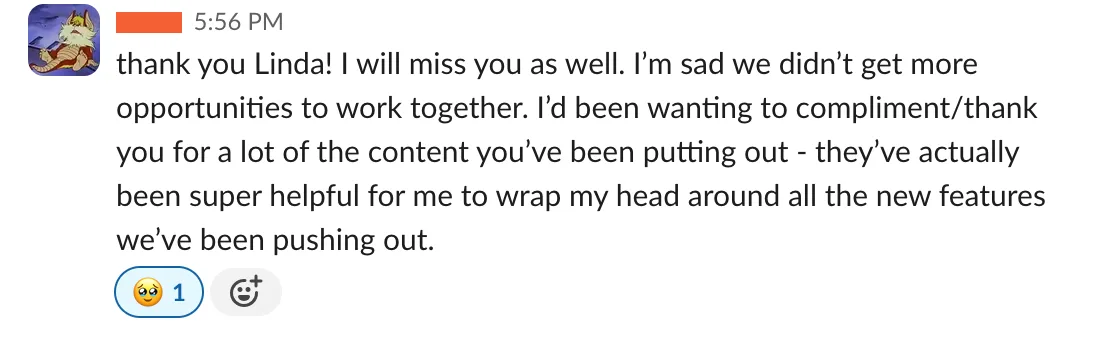
Slack message from a teammate thanking Linda for content that helped them understand new features
A teammate, as I left. My content helped them "wrap my head around all the new features we've been pushing out."
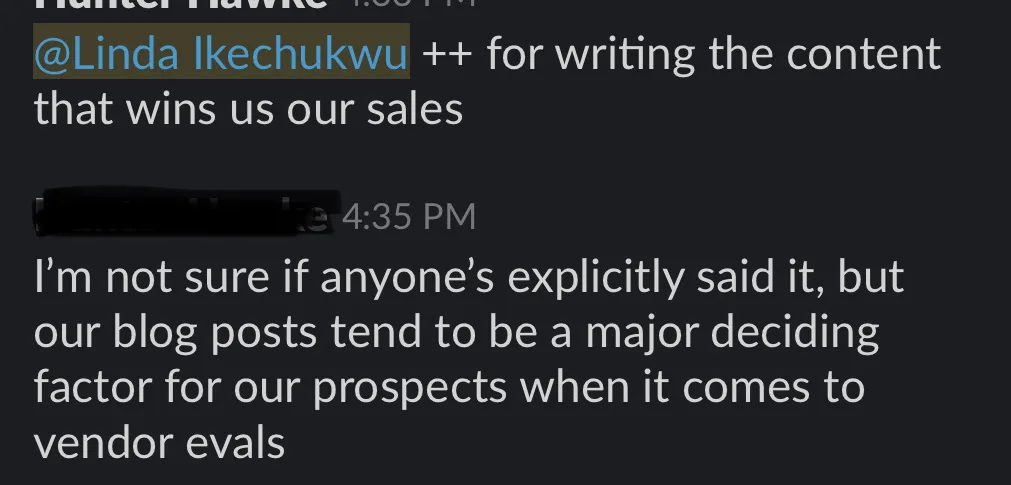
Slack message from Smallstep's sales team thanking Linda for writing the content that wins sales
Sales team, in Slack. Our blog posts are "a major deciding factor" in vendor evaluations.
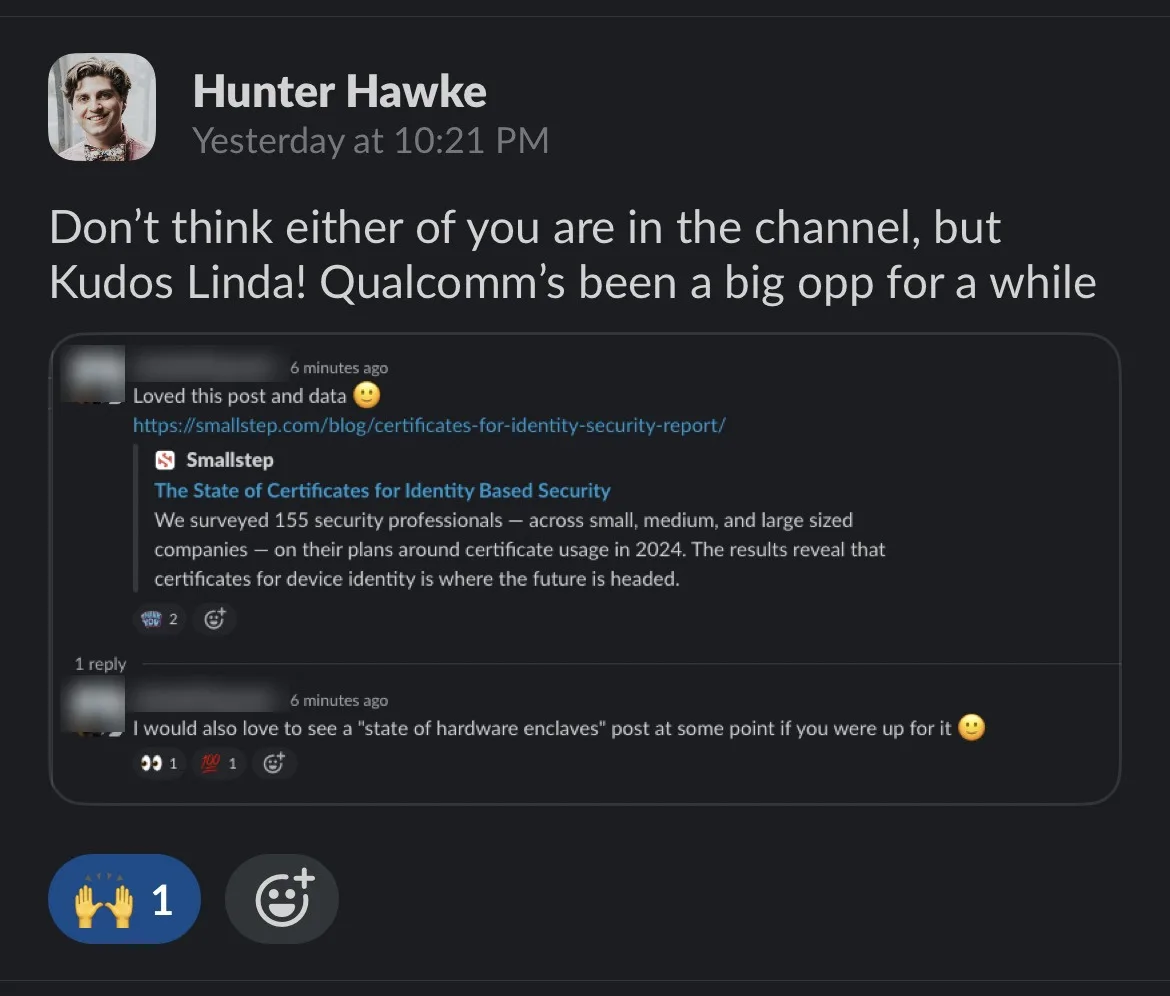
Slack thread where a Qualcomm engineer praises the State of Certificates report
Qualcomm. A big open opportunity praised my State of Certificates report, and asked for another.
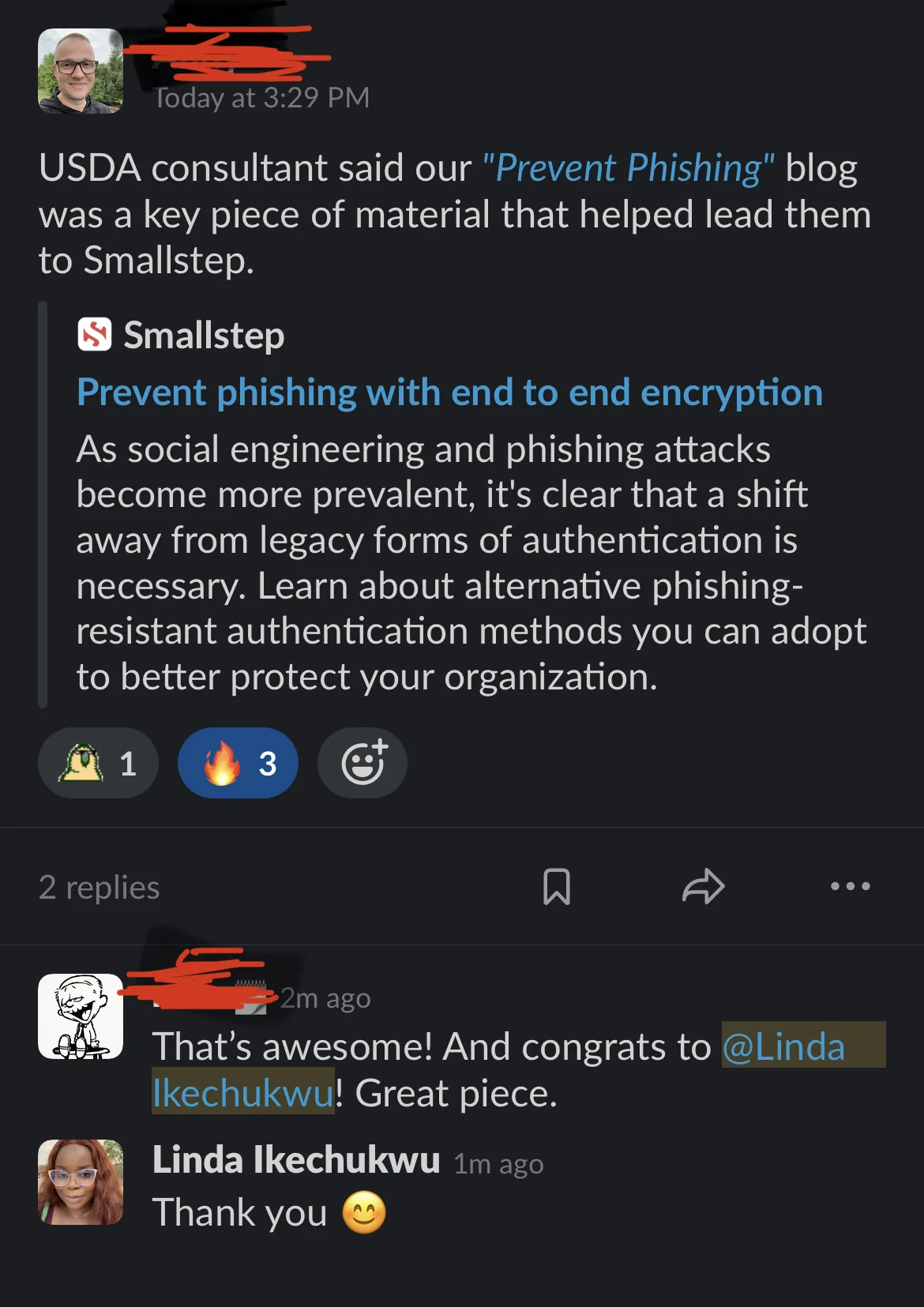
Slack message saying a USDA consultant found Smallstep through Linda's Prevent Phishing post
USDA. Their consultant said my Prevent Phishing post helped lead them to Smallstep.

Why I'd be a great addition to your team

I'm a software engineer, so no technical subject is too hard for me to explain.

I've spent four years as a front-end and cloud engineer, and I still build. That means I can learn any technical product and explain it clearly and concretely, in a way your audience connects with. I talk to engineers as one of them. I know their language and their world.

Before I joined Smallstep, I had never worked with cryptography or public key infrastructure. So I read the textbooks, read the founders' notes, and immersed myself in the niche. By the time I left, people inside the company were thanking me for helping them understand what we were building.

Everything I make is part of a bigger strategy.

I don't make one-off pieces. Every article, doc, video or talk has a job in a plan tied to what the business needs, whether that's sign-ups, pipeline or fewer support tickets.

I hold an MBA from Esade Business School, which the Financial Times ranks seventh in the world. That's why I plan content around business goals and can make the case for it to leadership.

Meredith Kucherov

Meredith Kucherov

Technical Content Strategist and Team Lead, Animalz

Linda is an exceptionally talented technical writer and researcher. During our work together, I brought Linda some of our most challenging customers and subject matter and she consistently rose to the occasion. She independently researched new technologies, interviewed subject matter experts, and learned how to use the tools herself. She then translated that knowledge into clear and relatable prose.

Akanksha Yadav

Akanksha Yadav

Product Marketing Manager, Embold

The nature of the product (being very technical) made it difficult to find content writers who could create content that was both technically rich as well as readable. Linda was one of the few writers I worked with who expertly executed this task.

Jenessa Petersen

Jenessa Petersen

My manager at Smallstep

Linda's research methodology, her tenacity, ability to ask thought-provoking questions, and her quiet ability to make all the things people are talking about into a form others want to ingest is remarkable. Out of the people I have managed over the years, Linda is the fastest learner.

Carl Tashian

Carl Tashian

Offroad Engineer, Smallstep

Linda gets it done. Whether she's working on a video, a blog post, or a piece of documentation, she works from top to bottom: researching a topic, absorbing a huge amount of information very quickly, synthesizing it and developing a clear point of view, putting together an outline, and then filling in the details.

Content samples

Effective product education doesn't happen in one format. Whatever format is needed, I'm adept at it. And I don't just execute. I strategise and drive results.

Informational articles that rank and get cited by AI when customers are trying to understand a problem before they look for a product.

Smallstep sells certificate-based enterprise Wi-Fi. When we launched, I set up a full-funnel content strategy spanning TOFU and BOFU articles, landing pages, videos and documentation, to catch IT teams researching Wi-Fi security broadly, so that wherever they started their research, there was a next step that gradually led them to the product. These two pieces were part of that Enterprise Wi-Fi funnel.

Everything You Should Know About Wi-Fi Security

A deep 5,900-word technical guide breaking down what actually makes Wi-Fi secure, illustrated with 12 original diagrams, two comparison tables and a Wi-Fi security tier list. It covers how each generation of Wi-Fi security (WEP, WPA, WPA2, WPA3) handles authentication and encryption, how they compare, and why password-based and VPN-based Wi-Fi still leave traffic exposed for enterprises.

Ranking on page 1 for "how to secure enterprise Wi-Fi", "best way to secure enterprise Wi-Fi" and "Wi-Fi security".

MAC Address Filtering and Hiding SSID Won't Protect Your Wi-Fi Network

A 2,200-word article which uses everyday analogies and an original diagram to show why MAC filtering and hidden SSIDs fail. The article breaks down how MAC addresses and SSID broadcasts work, why both are easy to spoof or uncover, and why only strong authentication and encryption actually protect a network. When Apple's macOS Sequoia started rotating Wi-Fi MAC addresses, teams relying on MAC filtering were suddenly worried about their networks. I published this days later to meet them in that moment and introduce them to a better way.

Ranking for "should I enable MAC address filtering?", "should MAC filtering be on or off?", "is MAC address filtering secure?" and "is MAC filtering good for enterprise Wi-Fi?"

Messaging, copy & positioning

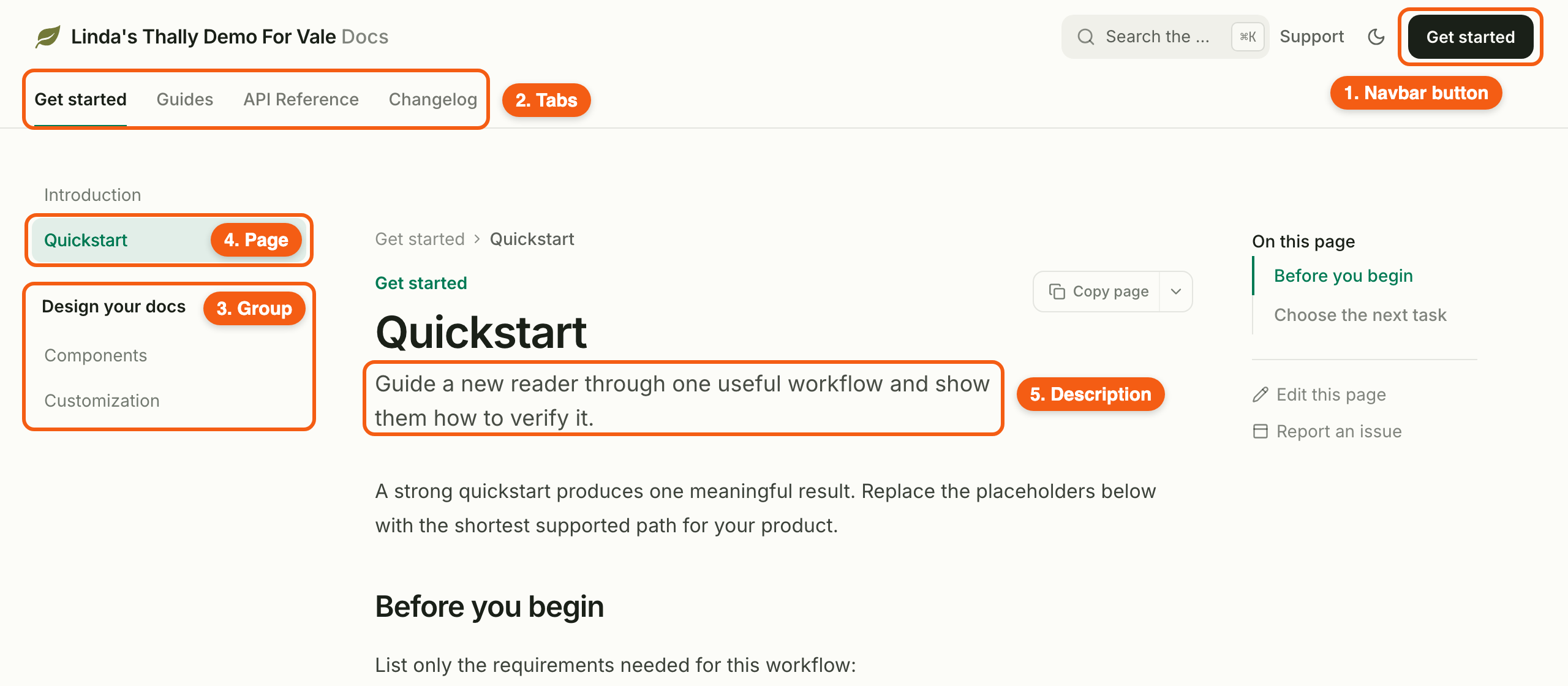
Positioning and messaging that make it obvious who a product is for, what it replaces and why it's better.

Before and after

Before, first draft
Before, first draft
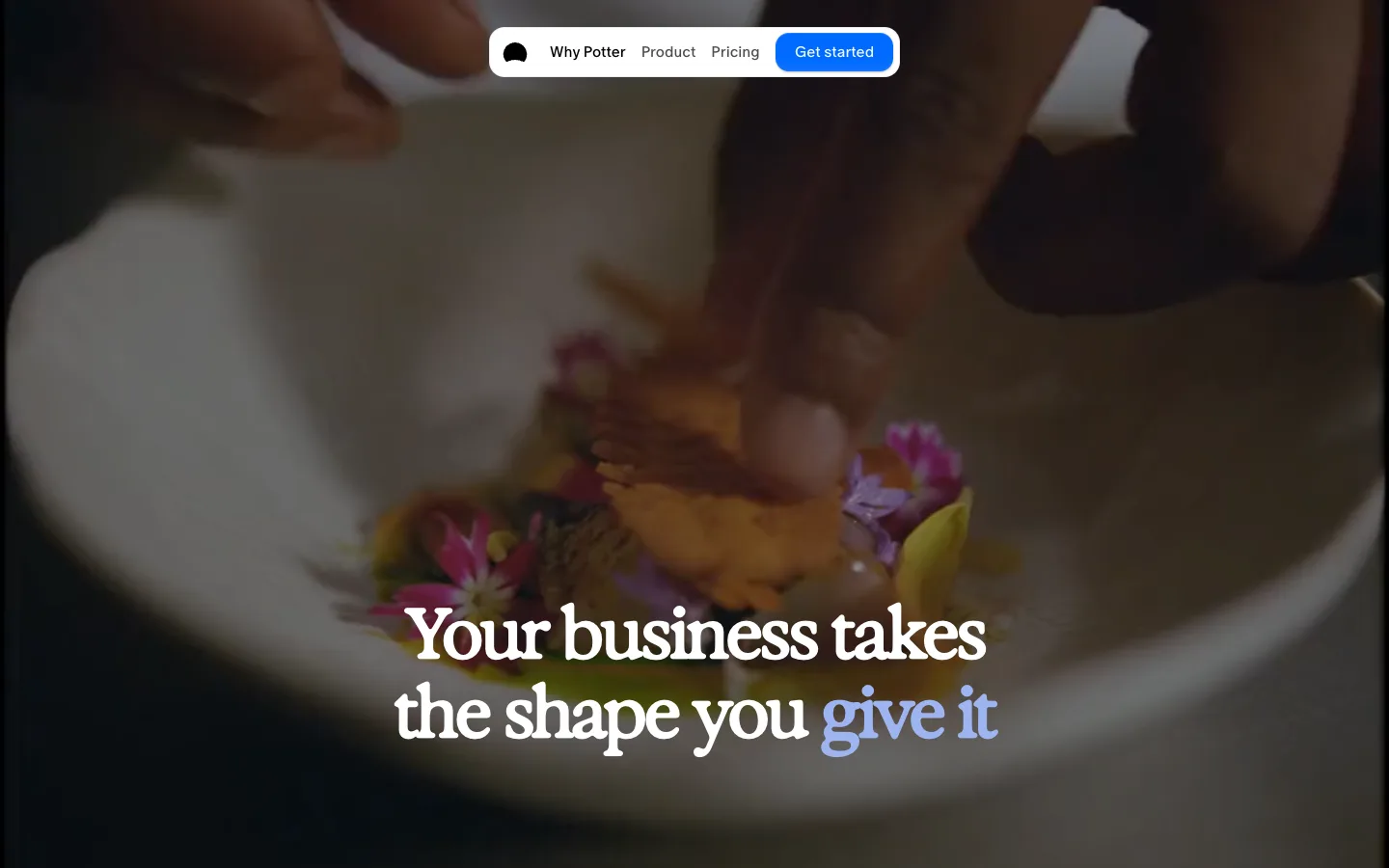
Before, live site
Before, live site
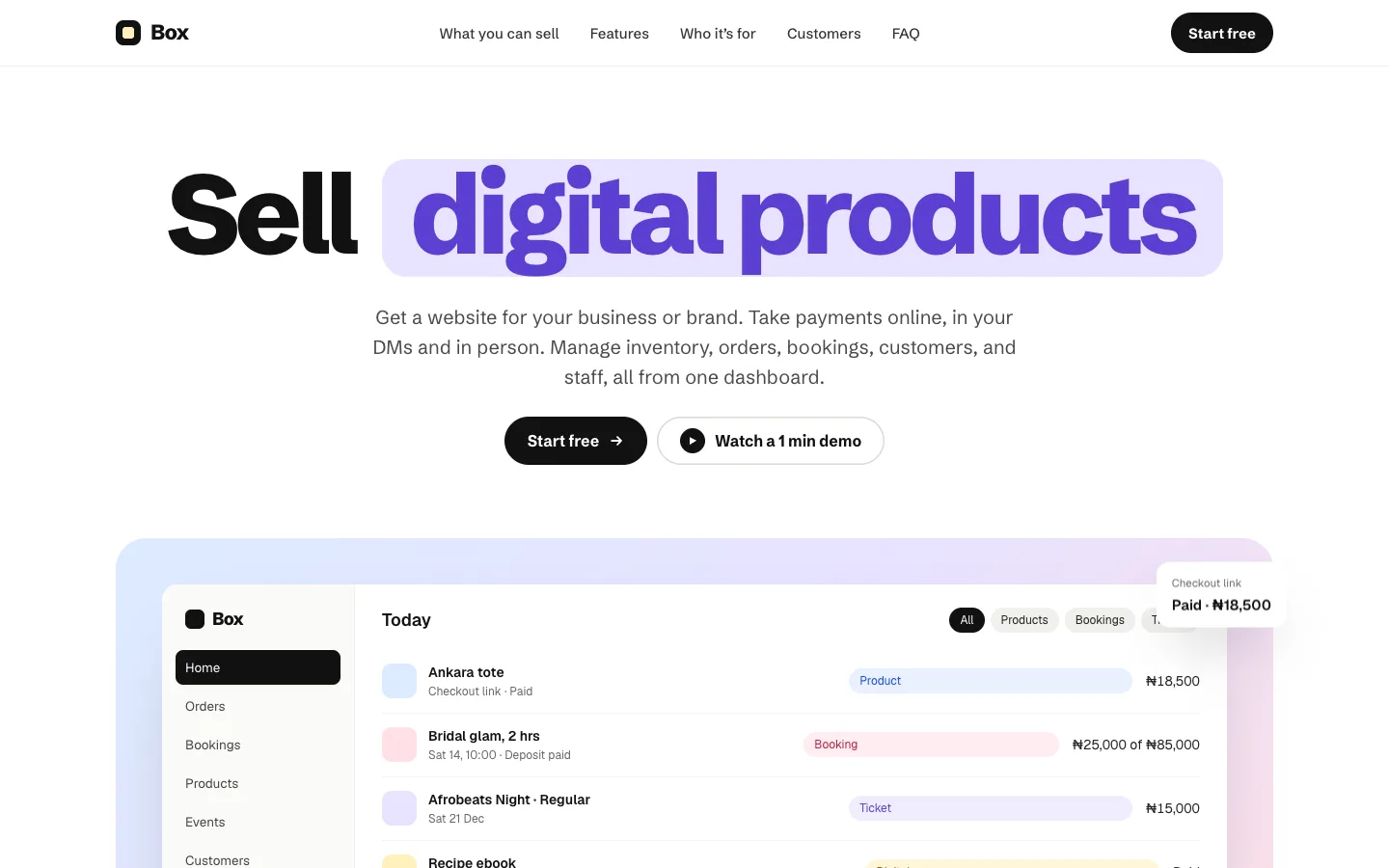
After, my rewrite
After, my rewrite

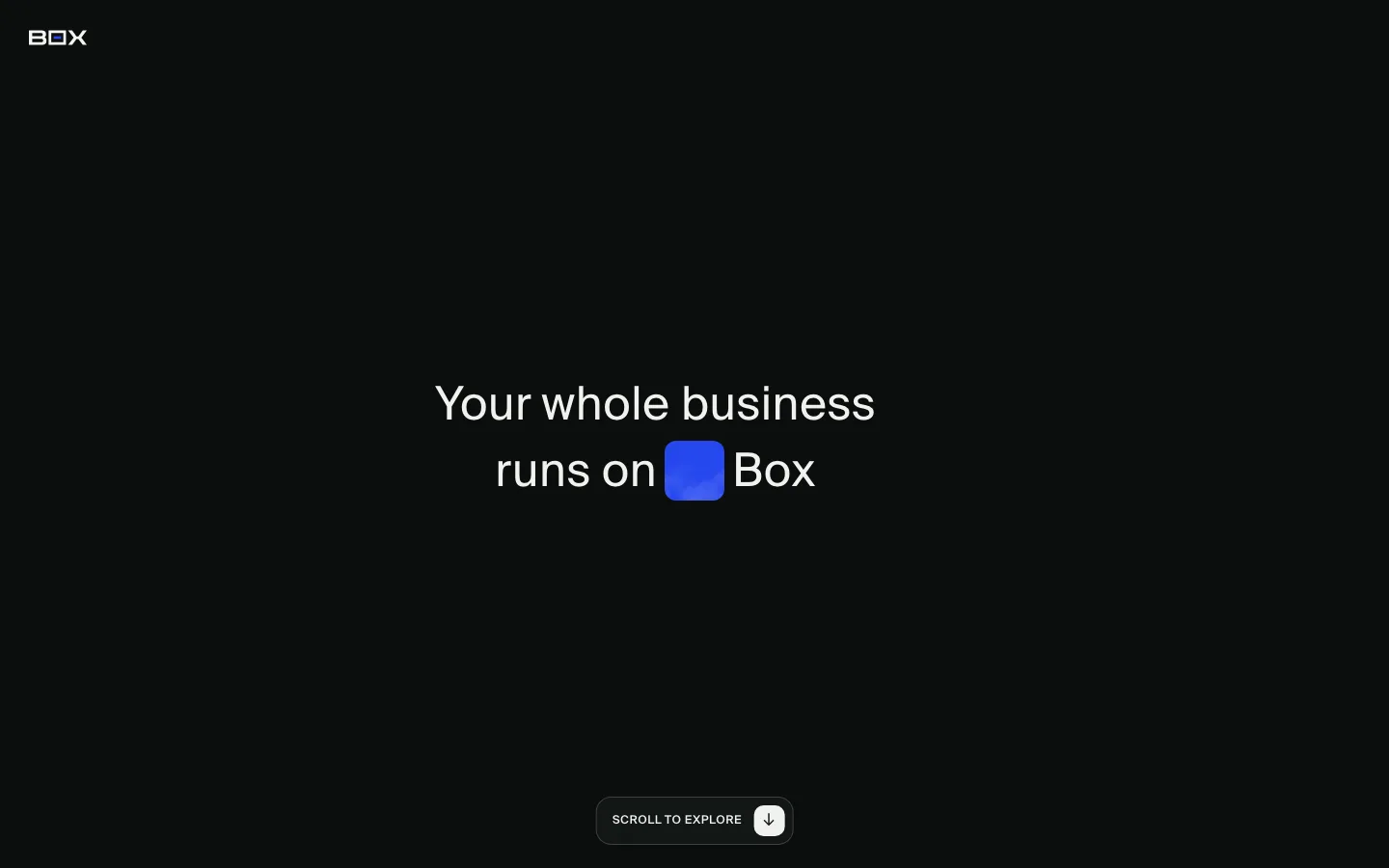
Box: from "composable commerce" to "Sell anything"

When I joined, Box had a working product and no story. The founder wasn't sure who Box was for, so the messaging hedged with lines like "composable commerce" and "Your business takes the shape you give it". Those lines describe the architecture. A seller reading them still can't tell whether Box solves their problem.

So instead of asking what Box is, I asked what problems or pain points it was addressing.

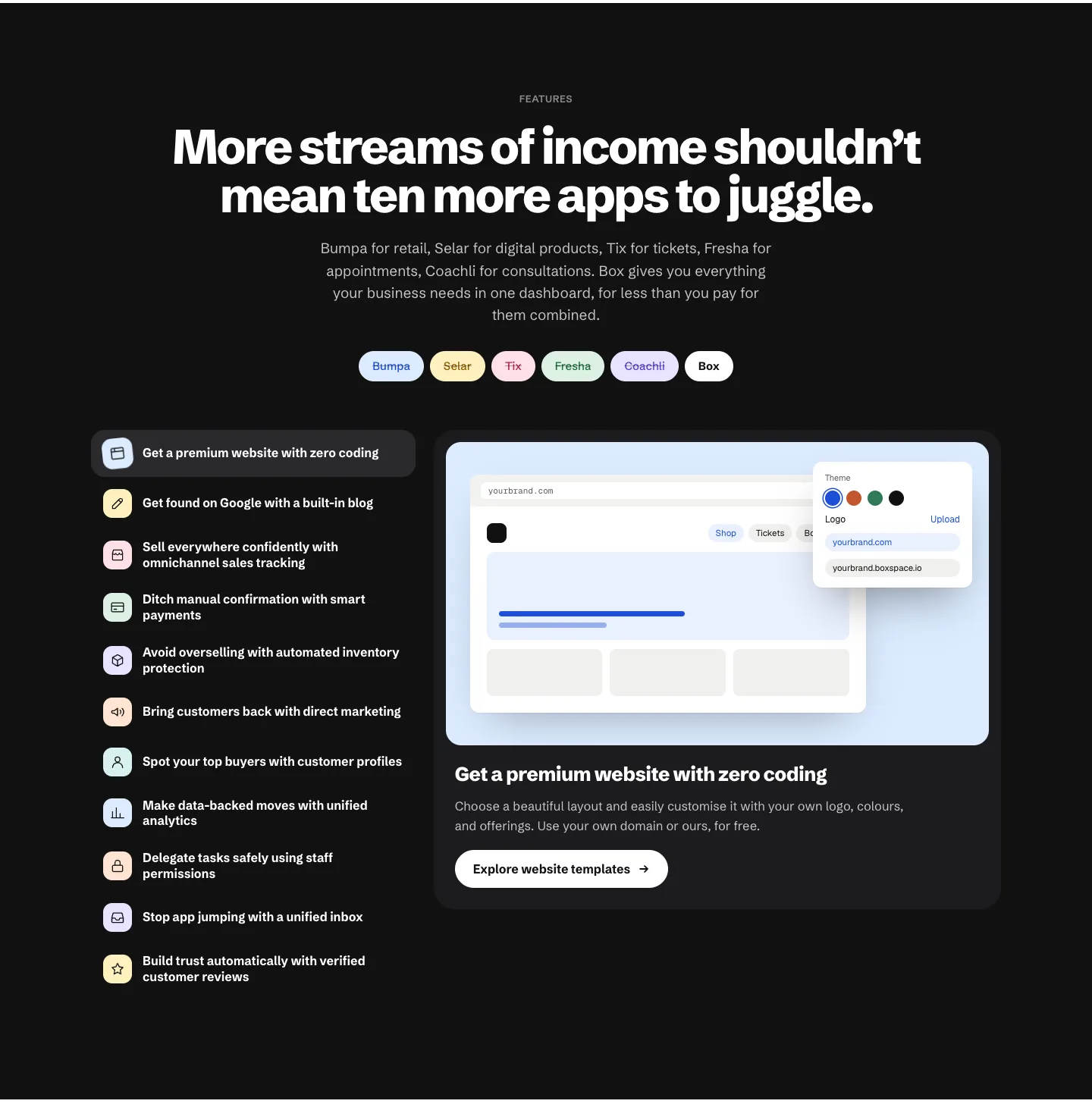
Finding the pain. The sellers Box could help most don't sell just one thing. A makeup artist takes bookings and sells lashes. A creator sells an ebook, coaching calls and tickets to a masterclass. Each of those income streams lives in a different app, such as Bumpa, Fresha, Tix, Selar or Coachli, and each app has its own fees, dashboard and customer list. That fragmentation was the problem, and solving it is Box's moat. If you sell more than one thing, you can run all of it on Box.

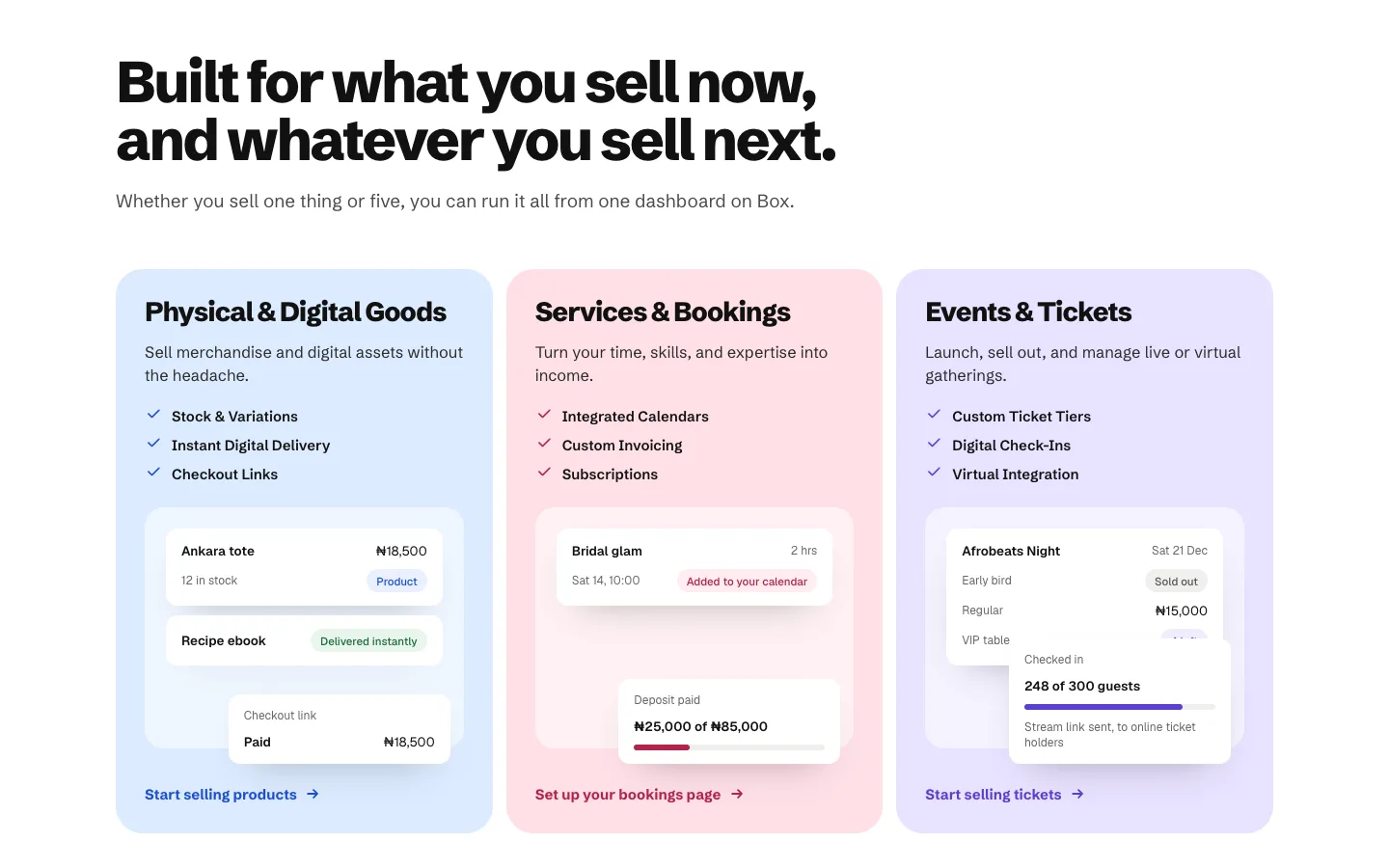
Turning the moat into a message. "Composable" asks the reader to imagine what they could build. "Sell anything" tells them what they can do today. The changing word (products, bookings, tickets, digital products) lets each visitor see their own business in the headline. Every section after it carries the same idea, from "Built for what you sell now, and whatever you sell next" to "More streams of income shouldn't mean ten more apps to juggle."

Choosing the customers. Once the moat was clear, the audience followed from it: businesses with more than one income stream, each paid per order, booking, ticket or project. That includes creators selling products, coaching and event tickets under one name, salons whose clients book and buy products in one checkout, and event organisers selling tickets and merch together.

Saying who it isn't for. I also decided who Box isn't for yet. Supermarkets run on a busy till, sit-down restaurants on open tabs, hotels on nightly room inventory, and wholesalers on trade credit. Each runs one deep, specialised operation that already has its own software built around how it gets paid. None of them fits Box's model of selling several things and being paid as you deliver. Naming them makes the promise believable to the businesses Box does serve. It also stops Box being judged against tools they were never meant to replace, and keeps the team building for the right customers.

Launching it. The launch video told the same story, the pain of running a business across too many apps and then Box as the fix. It got 60,000+ views from a brand-new X account and 150+ sign-ups in under two days.

BeforeAfter
Composable commerceSell anything
Your business takes the shape you give itBuilt for what you sell now, and whatever you sell next
Built for all kinds of businessA named list of who it's for, and who it isn't

Across the page

Built for what you sell now, and whatever you sell next
More streams of income shouldn't mean ten more apps to juggle
See the full Box page

Let's work together

If your product is hard to explain, I'd love to talk.

Email me